
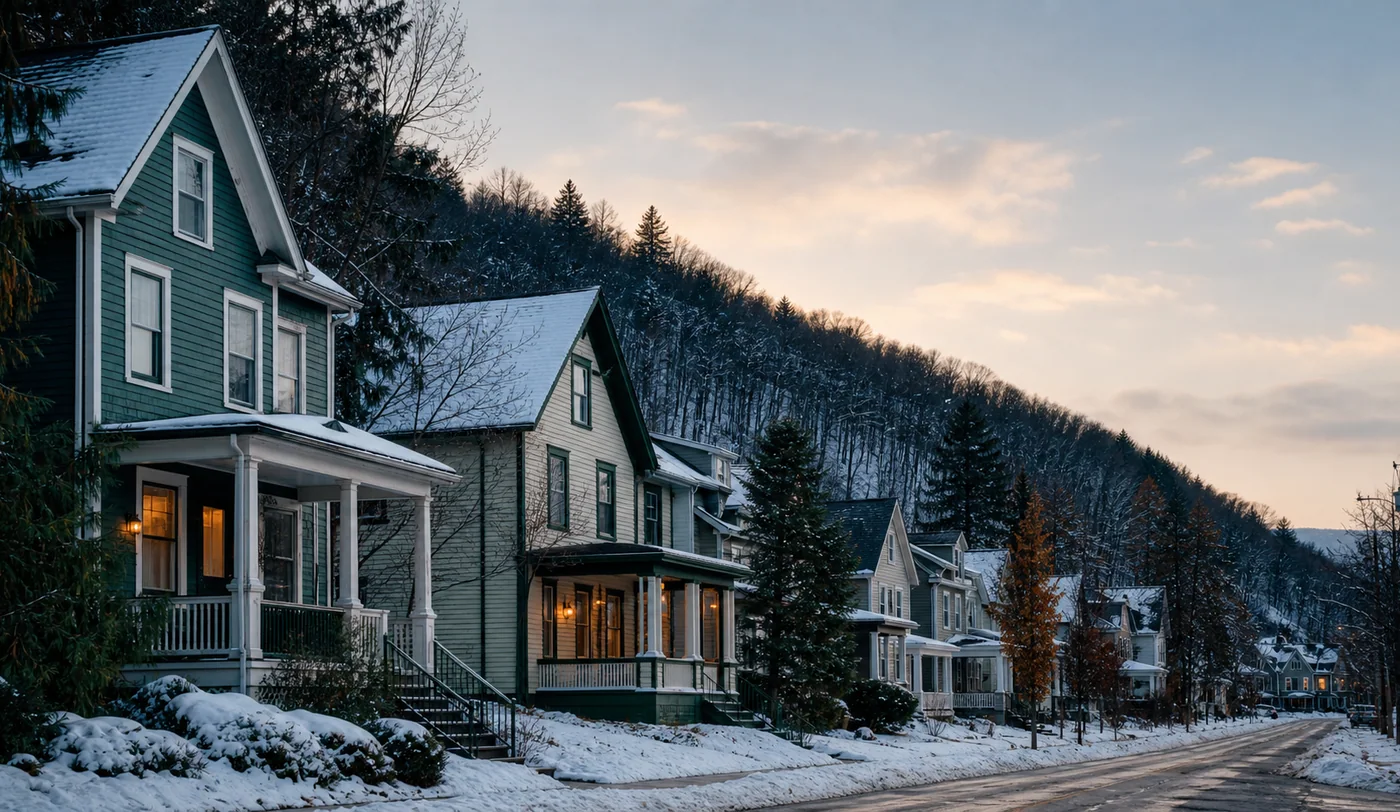
Cornell University—not Yale—is the Ivy League university in Ithaca. Cornell and Ithaca College shape a large rental market where occupancy can change quickly around winter break, spring break, graduation, summer sessions, and lease turnover.
The city does not become empty, and many students remain in Ithaca. But an individual student rental can move from several occupants to none in a weekend. The landlord may live outside Tompkins County and may not know that a window was left open, heat failed, water started running, a smoke alarm activated, or an unexpected person entered.
The right response is property monitoring with clear tenant notice and lawful placement—not surveillance of students.
What current Ithaca burglary data says
The Ithaca Police Department’s 2024 annual report lists 131 burglaries, down from 171 in 2023 and 203 in 2022. Its 2025 annual report says property crime overall declined another 12 percent compared with 2024.
Those are encouraging trends. They do not mean burglary disappeared, and they do not prove a seasonal pattern around Cornell breaks. Citywide annual data covers many kinds of properties and circumstances.
Cornell’s own winter closing notice states that residential security needs increase when fewer residents are present as closing approaches. It tells residents to take valuables, lock windows and doors, turn off lights, and report unusual observations.
Historical local reporting adds context but should not be mistaken for a current crime rate. The Ithacan reported that the Ithaca College Circle Apartments experienced three burglaries and one criminal-trespass incident during the 2015–16 winter break. That event is nearly a decade old and occurred at a specific complex; it demonstrates a scenario, not a prediction for every Ithaca rental today.
Build the rental security plan with tenants
Before installing any sensor, define its legitimate property purpose and address it in the lease, notices, and move-in process as local law requires. Explain what is measured, where it is installed, who can see it, how long data remains available, and what happens during occupancy versus confirmed vacancy.
Good property-condition signals include:
- Leak state near plumbing and appliances.
- Temperature near freeze-vulnerable pipes.
- Smoke or alarm state from compatible, code-compliant equipment.
- Utility readings for the building or lawful owner-controlled area.
- Door or window state with appropriate notice and placement.
- Motion only in lawful common, exterior, or confirmed-vacant contexts.
Avoid identity tracking, indoor cameras, recorded audio, and monitoring private tenant behavior. A technical capability never overrides a tenant’s rights or the owner’s legal duties.
Use an academic calendar as a prompt, not proof of vacancy
Do not assume every tenant leaves because Cornell closes some residences. Graduate students, international students, employees, subtenants, and approved residents may remain. Off-campus leases do not automatically follow on-campus housing dates.
Ask tenants to confirm the property’s occupancy status through the agreed process. Then activate a dated break mode only for the relevant unit or building.
A useful break-mode workflow can:
- Change entry and utility rules at the confirmed start time.
- Keep fire, leak, and freeze alerts active regardless of occupancy.
- Apply a compatible thermostat setback that remains safely above the property-specific minimum.
- Treat sustained water use differently when the unit is confirmed empty.
- Restore occupied settings before the agreed return time.
Require manual confirmation when the schedule is uncertain. A calendar should reduce setup work, not decide whether a home is occupied without evidence.
Protect Ithaca pipes during winter break
Ithaca winter conditions make heat and plumbing continuity important. The central thermostat may not reveal the temperature beside an exterior-wall pipe, basement plumbing, or an unheated shared area.
Place a compatible temperature sensor at the vulnerable location. Create an early warning and a critical condition. If the exact thermostat exposes a supported command, ask CHIRP to raise it to an owner-selected safe setting and verify the command result.
Pair temperature with water protection. A point leak sensor and professionally installed compatible valve can close the supply when appropriate. The design must account for hydronic heating, sprinklers, shared plumbing, and other systems; a qualified local plumber should determine whether and where an automatic valve is safe.
Make smoke alerts reach someone outside the rental
Required smoke and carbon-monoxide alarms must follow New York and local code, placement, testing, and maintenance requirements. A connected alarm can add remote notification, but it does not replace required audible and interconnected life-safety equipment.
When an alarm event arrives during confirmed vacancy, do not send an untrained student, neighbor, or maintenance worker into a potentially dangerous building. Use the emergency response defined with local authorities and fire-safety professionals.
The U.S. Fire Administration advises monthly smoke-alarm testing and replacement at 10 years from manufacture. Schedule testing and documented maintenance around turnover without relying on remote status alone.
Detect a building problem without spying on students
Utility monitoring can be especially valuable in a multi-unit or shared rental when it is lawfully installed at the right scope. During a confirmed vacancy, sustained water flow can suggest a running fixture or leak. A power or heating change can suggest equipment trouble.
Do not infer individual behavior from whole-building data. Explain the operational purpose and avoid using a property-protection system to score tenants or reconstruct private routines.
If noise monitoring is used in a short-term rental, choose a disclosed decibel-only device and sustained-duration rule. Traditional long-term student housing creates different legal and lease questions; consult qualified local counsel before introducing any environmental monitoring intended to enforce behavior.
Plan access for the Ithaca response person
An out-of-town owner needs a local response path. This may be the owner, an individual realtor directly overseeing the rental, a maintenance professional, or a trusted person.
Give each helper access only to the property they serve. Do not share the owner’s master password. Decide which events they handle and which go directly to 911, the Ithaca Police Department, Cornell University Police for its jurisdiction, Ithaca College Public Safety, the fire department, or a licensed tradesperson.
Brokerages and property-management companies with employees, client portfolios, and commercial workflows should use Kilo rather than treating a personal CHIRP account as a staff-operations system.
Ithaca student rental break checklist
Before winter, spring, or summer vacancy:
- Confirm actual occupancy and dates with tenants.
- Follow notice, consent, lease, housing, and privacy requirements.
- Ask tenants to secure windows and doors and remove valuables.
- Inspect locks, exterior lighting, plumbing, heat, alarms, and visible maintenance.
- Test leak, valve, freeze, smoke, utility, power, and connectivity alerts.
- Create loss-of-contact and low-battery notifications.
- Apply only the vacancy rules that match the confirmed unit status.
- Give the local responder scoped access and a written escalation plan.
- Restore occupied settings before tenants return.
Ithaca’s improving property-crime trend is good news. It is not a reason to leave a distant rental blind during the periods when fewer people may notice a building problem. Privacy-conscious monitoring lets the property report leaks, freeze risk, smoke, utility changes, and unexpected entry without turning tenants into the monitored subject.
This article provides general operational information, not legal advice. Landlords should consult qualified New York counsel and local officials about tenant notice, consent, building code, fire safety, and device placement.