
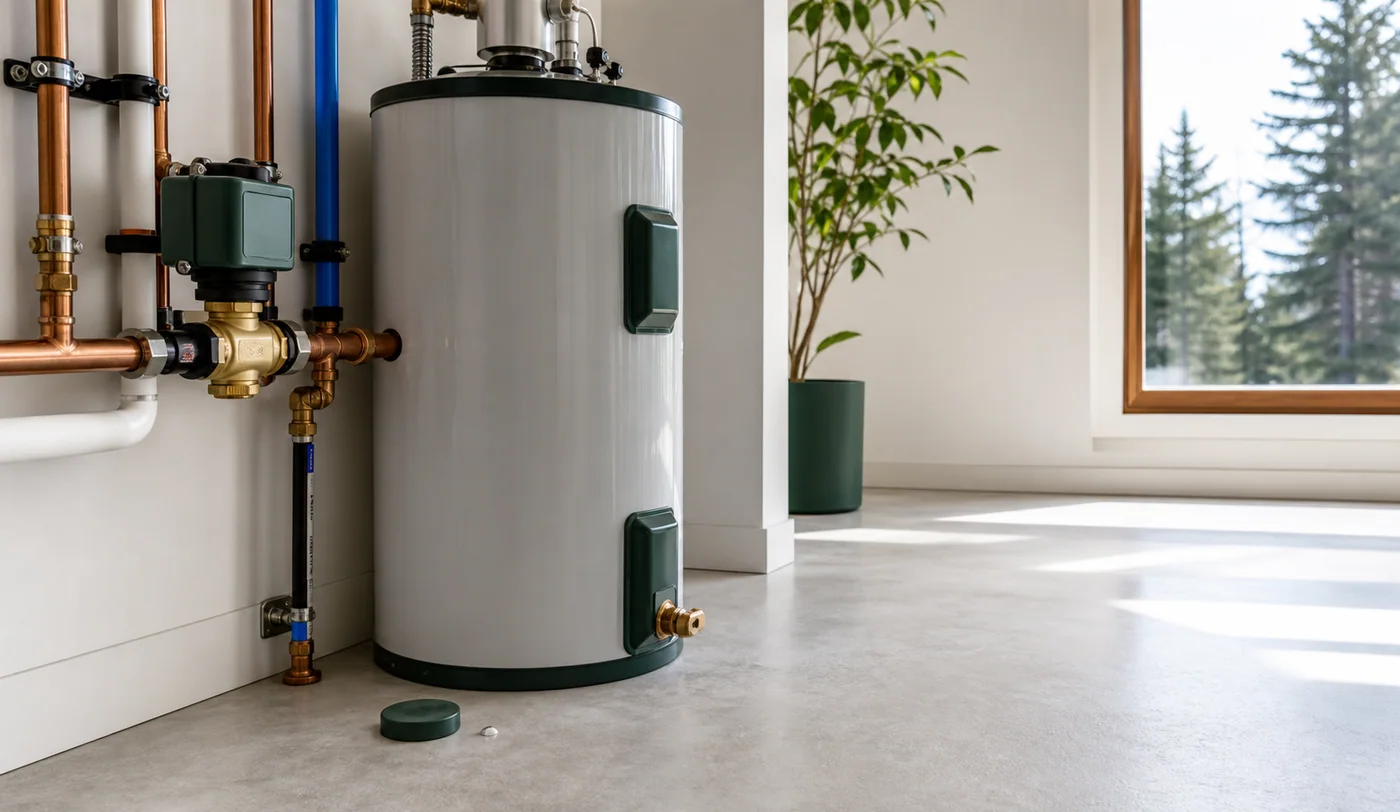
A leak alert tells you water is on the floor. An automatic water shutoff can change how much water reaches the floor after the leak starts.
That distinction matters when the property is hours away. A phone notification cannot turn a manual valve, and a neighbor may not see the message immediately. The goal is a layered response: detect water at the likely source, close a valve that CHIRP can control, confirm that it closed, alert the owner, and bring in local help when the automatic step does not succeed.
The U.S. Environmental Protection Agency notes that leak-detection and flow-monitoring devices can identify unexpected moisture or use. Some systems can also activate a shutoff valve. The agency specifically calls remote or automatic shutoff helpful for a vacation home without regular occupancy.
What a complete vacation home leak system includes
A practical design has more than one gadget.
- Point leak sensors sit where water would first collect: beside a water heater, under a sink, near a washing machine, beneath a condensate line, or next to vulnerable plumbing.
- Flow monitoring watches water moving through the home and can reveal use that does not match the property’s occupied or vacant state.
- An automatic shutoff valve closes a fixture branch or the main supply when CHIRP sends the instruction.
- A saved response decides when to act and who should know.
- A confirmation check makes sure “close requested” is not confused with “closed.”
- A local response plan covers plumbing damage, power loss, a stuck valve, and anything the automatic shutoff cannot safely resolve.
Not every property needs every layer on day one. A high-consequence remote home should at least avoid treating the alert itself as the whole plan.
Put water leak sensors where the leak begins
Start with a walk-through of water sources and previous failures. A sensor in the center of a large basement may detect water only after it has traveled under flooring or around stored belongings.
Prioritize:
- The water heater and pressure-relief discharge area.
- Washing-machine supply hoses and drain.
- Sinks, toilets, dishwashers, refrigerators with water lines, and ice makers.
- Boiler, hydronic heating, condensate, sump, and well equipment.
- Low points where water collects.
- Pipes along exterior walls or in unheated spaces.
Point sensors answer “is this place wet?” Flow monitoring answers a different question: “is water moving in a way this property should not be using it?” Using both can improve context, especially when a rental is occupied and normal water use changes from one reservation to the next.
Choose the shutoff scope carefully
A whole-home valve can limit water from the main supply, but closing it may affect fire-suppression, heating, irrigation, treatment, well, or other connected systems. A fixture-level valve limits a smaller area but does not protect the rest of the house.
Have a qualified plumber determine the correct location, valve size, installation method, and interaction with other systems. The EPA WaterSense guide also advises checking supported pipe size and notes that in-line, point-of-entry installation will likely require a plumber.
A suitable valve must let CHIRP close it and report its final position. A device that merely appears in an app is not automatically suitable for an automatic shutoff.
Build the leak automation around confirmation
The rule should be understandable before it is activated. One example is:
When the laundry-room sensor gets wet, close the main water valve. Notify the owner immediately. If the valve does not report closed, send a critical alert to the owner and designated local helper.
That flow includes four distinct facts:
- The sensor reported wet.
- CHIRP asked the valve to close.
- The valve confirmed success, or it did not.
- The right people received the relevant message.
Do not treat “close requested” as success. The phone should say whether the valve confirmed that it closed—and warn you clearly when it did not.
Account for power and internet outages
An automatic valve may need mains power. A long-range leak sensor can run on a battery, but the small property hub still needs power and internet to send remote information. A Wi-Fi device depends on the router and internet path it uses.
Map each dependency:
- What happens to the valve when power fails?
- Can it be operated manually?
- Does it retain its position?
- Will the system alert when the sensor, gateway, or property internet stops reporting?
- Is backup power appropriate for the router, gateway, or valve?
- Does a local person know where the manual shutoff is?
Connectivity monitoring belongs in the plan because a quiet dashboard can mean a quiet home—or a disconnected one.
Avoid false shutoffs in occupied rentals
A point sensor with a clear wet/dry state is often easier to reason about than an unusual-flow model. Flow rules need to understand normal guest use, cleaning, irrigation, pool filling, and maintenance.
Use occupied and vacant modes. A sustained flow event during a confirmed vacancy can deserve a different response from a long shower during a stay. When uncertainty is high, start with an alert, gather evidence, and make the automatic action more specific after testing.
Always explain installed devices and relevant property procedures to guests, cleaners, and local helpers. Automation should not create a hidden operational surprise.
Test the automatic water shutoff before leaving
Testing is not a one-time setup checkbox. Run a controlled test that proves the whole chain:
- Wet the sensor according to its instructions.
- Confirm the expected reading reaches CHIRP.
- Confirm the rule selects the correct valve.
- Observe the physical valve close.
- Confirm the system reports the result accurately.
- Test the failure notification in a safe simulation.
- Reopen the valve and verify normal operation.
Schedule periodic tests based on manufacturer and professional guidance. The EPA recommends checking installed leak-detection or flow-monitoring systems at least annually to make sure they operate correctly.
Start with two devices free
A leak sensor plus a compatible shutoff valve is a strong two-device CHIRP Free-plan project. It proves that the platform can receive a real condition, issue a real command, and make the outcome visible.
From there, add sensors at other sources, flow monitoring, temperature protection, and a property-specific escalation schedule. Because CHIRP supports several connector paths, compatible hardware from different manufacturers can participate in the same response instead of forcing the whole home into one brand.
The “wow” is not a wet-floor notification. It is the moment the property detects water, closes the supply, confirms the action, and tells you what happened before you could possibly arrive.
A water shutoff affects building systems and can cause damage if designed or installed incorrectly. Use qualified plumbing and electrical professionals and follow device instructions, codes, insurance requirements, and local law.